

A Complete Guide to How It Enables Robots to Change Tools Automatically
In a factory, one robot may need to perform different tasks such as picking, welding, grinding, material handling, and inspection. Different tasks require different tools. A robotic tool changer is a device that helps the robot automatically change tools.
Simply put, it works like a robot’s “quick-change head.” The robot can first use a gripper to pick up parts. After completing the task, it returns the gripper to the tool rack and replaces it with a welding gun or grinding head, without requiring workers to manually remove and install tools.
What Are the Main Components of a Robotic Tool Changer?
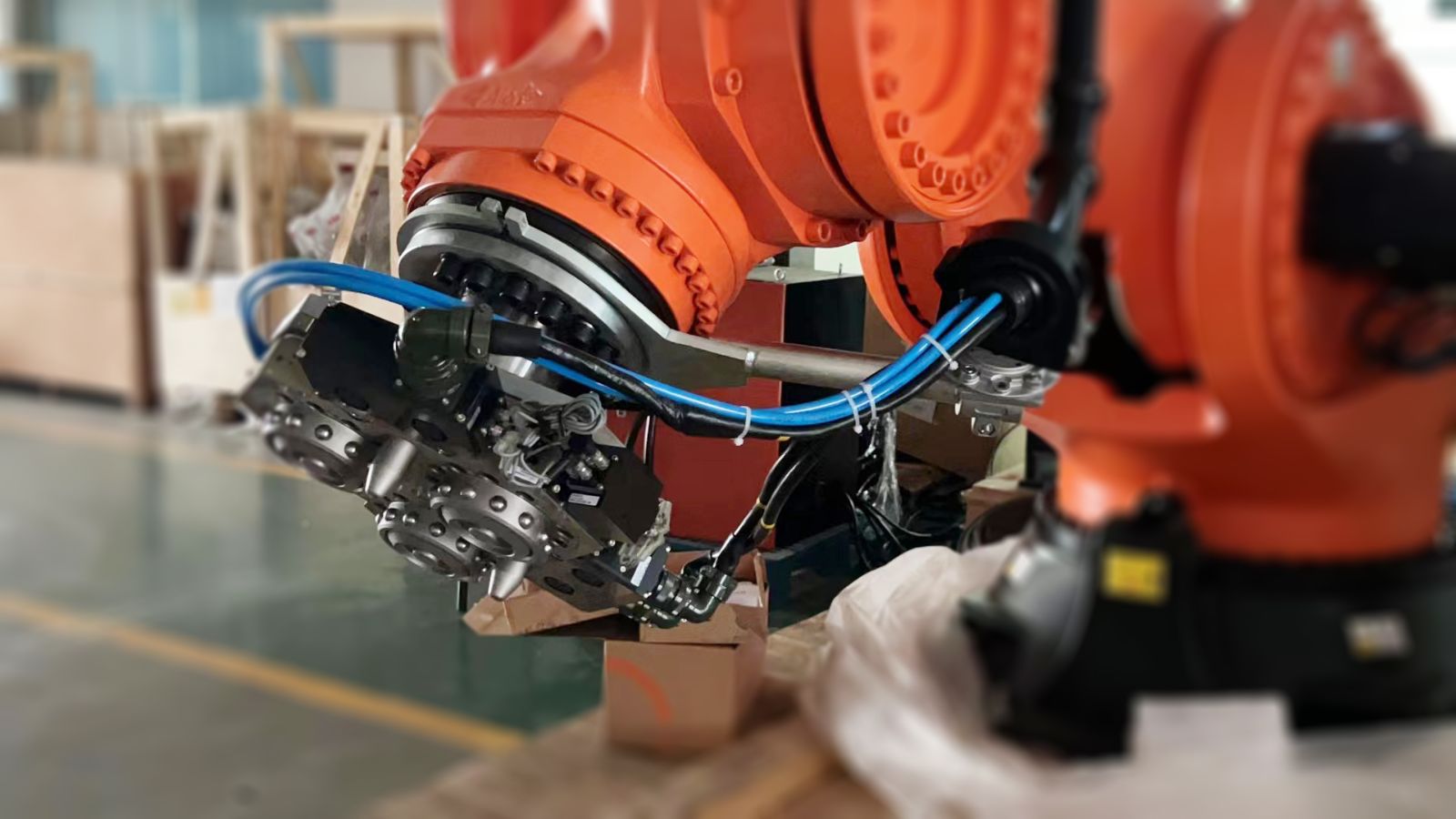
A typical robotic tool changer mainly consists of the following components:
Robot-Side Mounting Plate
This mounting plate is installed on the robot wrist and connects the robot to the tool changer.
Tool-Side Mounting Plate
This mounting plate is installed on working tools such as grippers, welding guns, suction cups, and grinding heads. Different tools can be equipped with different tool-side mounting plates.
Locking Mechanism
After the robot picks up a tool, the locking mechanism secures the robot-side mounting plate and the tool-side mounting plate together. Common locking methods include pneumatic locking, mechanical locking, and electric locking.
Positioning Mechanism
The positioning mechanism helps the tool return to the correct position every time. As a result, the robot can maintain good working accuracy after repeatedly changing to the same tool.
Air, Power, and Signal Interfaces
Some tools require compressed air, power, vacuum, or control signals. A robotic tool changer can connect these interfaces while mechanically coupling the tool, allowing the tool to operate properly.
If the system does not confirm that the tool has been securely locked, the robot usually will not enter high-speed operation. This helps reduce the risk of tool dropping, collisions, and equipment damage.
Why Do Factories Need Robotic Tool Changers?
The biggest advantage of a robotic tool changer is that it allows one robot to perform more tasks.
In automotive manufacturing, a robot can switch between welding guns, grippers, and assembly tools. In metal processing, it can change between grinding heads, deburring tools, and inspection equipment. In logistics warehouses, the robot can select different suction cups or grippers according to the size of the goods.
Post time: Oct-10-2026


